


This is Ink & Intrigue—the blog where romance ignites, secrets simmer, and every love story hides a twist. I’m your blog host, Sheila Kell, romance author and lover of plot twists, slow burns, and morally questionable book boyfriends.
Danger is part of the deal in romantic suspense.
- Someone is being followed.
- A killer is out there.
- A threatening message arrives.
- Someone breaks into the house.
- There’s a suspicious car parked across the street.
All of those things can create suspense. But then comes the moment when ordinary danger becomes something much more unsettling. It’s when the character realizes: This isn’t random. Someone chose me. And suddenly, everything changes.
It’s All in the Details
Imagine a character receives a note that says: You’re going to regret this. Creepy.
Now imagine the note says: You should have stayed home Tuesday night. That’s different. Because now the character knows the person threatening her didn’t simply find her address. They’ve been watching.
The smaller and more specific the detail, the more personal the threat can feel.
- Maybe the villain knows which door she uses when she gets home.
- Maybe something inside her house has been moved.
- Maybe she receives a photograph taken somewhere she thought she was alone.
- Or perhaps the threat includes information almost nobody knows.
That’s when fear changes. Because the question is no longer simply: Who wants to hurt me? It’s: How close are they?
The Safest Places Stop Feeling Safe
Home is supposed to be where we lock the door behind us and shut out the rest of the world. So naturally, suspense writers like to ruin that. 😂
A broken window is frightening. But sometimes something much quieter is worse.
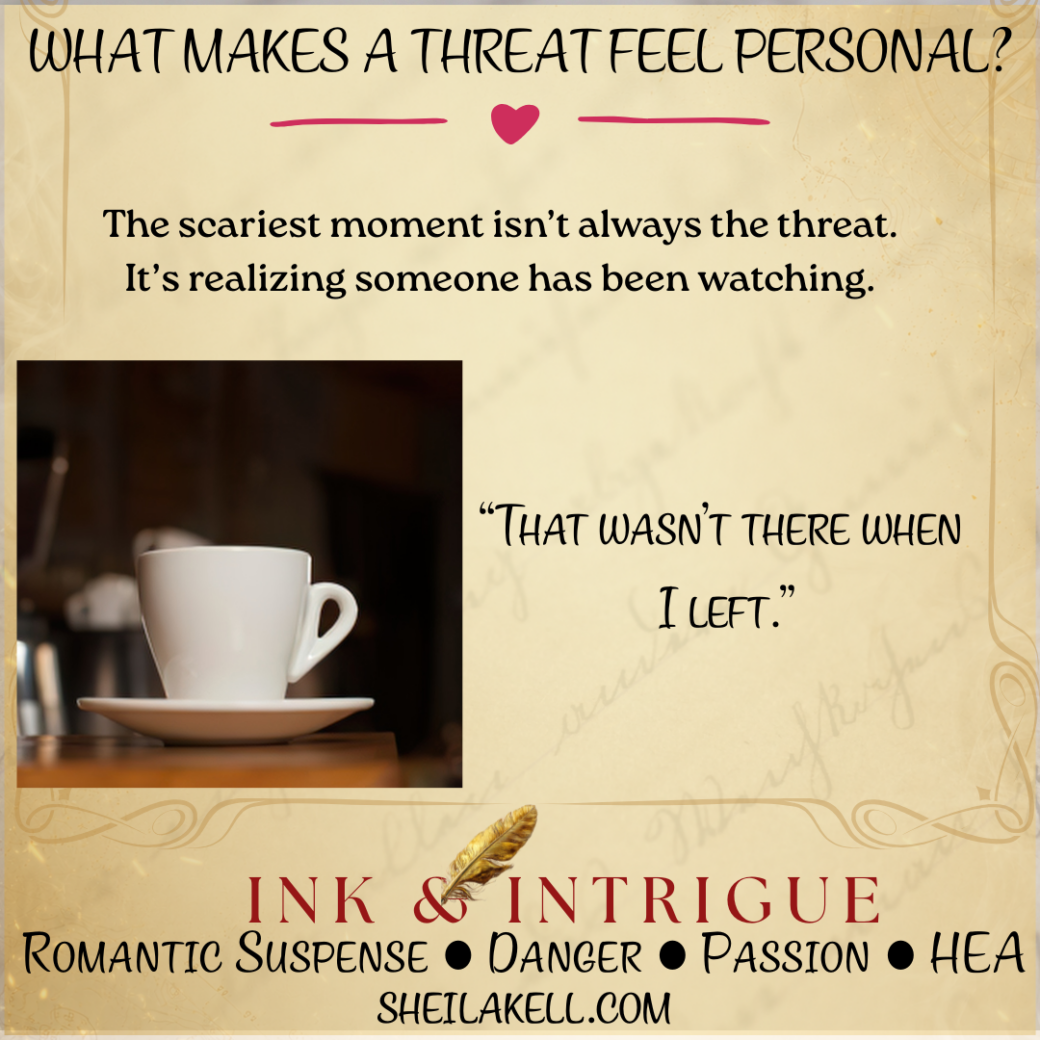
The heroine walks into her kitchen, and everything looks normal. Almost. Then she notices the coffee mug she left beside the sink is sitting on the counter. Maybe she moved it. Probably. Except she remembers leaving it there.
Now nothing has happened. There’s no attacker in the room. No dramatic confrontation. Not even a threatening message. Just a coffee mug. And suddenly her home doesn’t belong entirely to her anymore. Someone may have been there.
That can be far more unsettling than shattered glass.
History Raises the Stakes
A threat becomes even more personal when it connects to something in the character’s past. Maybe she thought she’d escaped it. Maybe he believed an old case was finished. Maybe someone they trusted wasn’t who they thought. Or perhaps a decision made years ago has finally come back demanding payment.
Now the danger isn’t simply interrupting the character’s life. It’s exposing something.
- Regret.
- Guilt.
- A secret.
- An old wound.
And the threat isn’t only physical anymore. It’s emotional.
Those are the kinds of threats I find especially interesting because defeating the villain may require the character to confront something they’ve spent years avoiding.
Who Is Doing This?
Suspense thrives on questions.
- Who is watching?
- How much do they know?
- Why now?
- What do they want?
And perhaps most importantly: Who can I trust?
That last question is especially useful when a romance is developing. Because falling in love requires vulnerability at exactly the moment the character has learned that vulnerability might be dangerous. Excellent timing.
Authors are helpful that way. 😏
Personal Danger Changes the Romance
Romantic suspense works best for me when the romance and suspense aren’t two separate stories occupying the same book. The danger should affect the relationship. And the relationship should affect how the characters respond to the danger.
When a threat becomes personal, the person standing beside the character becomes more important too.
- Can she trust him with the secret she’s been hiding?
- Will he believe her when the evidence doesn’t make sense?
- Can he protect her without trying to control her?
- Can she accept help without surrendering her independence?
- And what happens when the villain realizes exactly who matters most to her?
Now we have a problem. Because once someone you love becomes a target, the rules change again.
Sometimes the Scariest Threat Isn’t Violent
A villain doesn’t always need to say: I’m going to kill you. Sometimes: I know what you did. is worse. Or: He doesn’t know the truth, does he? Well. That’s inconvenient.
The most effective threat attacks whatever the character values most.
- Their safety.
- Their career.
- Their reputation.
- Their family.
- Their freedom.
- Their relationship.
Sometimes the villain doesn’t need to destroy anything. They only need to convince the character that they can.
The Villain Has to Know Where to Aim
That’s ultimately what makes a threat personal for me. The villain understands where it will hurt. Not necessarily physically. Emotionally.
They know what the character fears losing. And once the reader knows too, every threat carries more weight.
The danger isn’t simply: Will she survive? It becomes: What will this cost her?
That’s when suspense digs in its claws. Because danger can make us worry about a character.
Personal danger makes us afraid for everything that character loves.
And once love enters the equation? Well… That’s when I start making everyone’s lives particularly difficult.
Sorry, characters.
Not really. 😏
Readers, what creeps you out more in a suspense novel: an obvious threat, or the tiny sign that tells the character someone has been watching them?
Thanks for joining me on Ink & Intrigue, where romance and suspense go hand in hand.
If you enjoyed today’s post, don’t forget to subscribe to stay updated.
Want more behind-the-scenes content, writing tips, or a peek into my books? Visit sheilakell.com or follow me on social media at @sheilakellbooks.
Until next time—keep writing, keep swooning, and remember: every heart has a secret. 💕