


This is Ink & Intrigue—the blog where romance ignites, secrets simmer, and every love story hides a twist. I’m your blog host, Sheila Kell, a romance author and lover of plot twists, slow burns, and morally questionable book boyfriends.
Today, I’m thrilled to introduce Patricia McAlexander, whose romantic suspense and, most recently, historical fiction with strong romance elements have captivated readers.
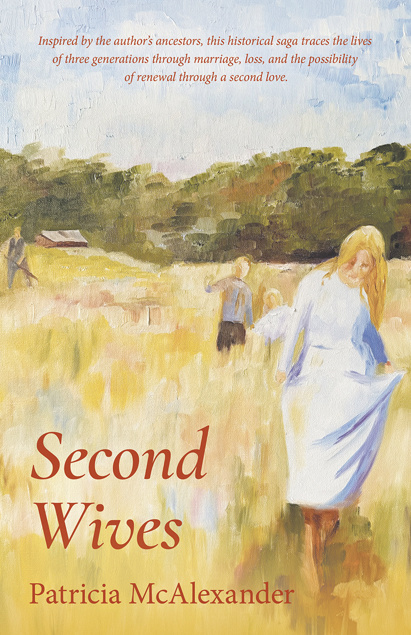
In this spotlight, Patricia gives us a behind-the-scenes look at her writing, particularly the inspiration behind Second Wives.
Whether you write stories involving romance, devour them, or dream of doing both—you’re in the right place. Let’s get into it and give a warm welcome to Patricia McAlexander! 💖
You know me, I’m going to jump straight into questions for Patricia.
What drew you to writing romance?
I’ve always enjoyed romantic themes. I grew up in the 1950s listening to popular romance songs (“Fever,” “Only You,” “You Don’t Know Me”). In these songs and the many novels I read then, a love story often mingles with other narrative elements—historical references, psychological issues, and a sad or happy ending. I’m sure this background helped me include strong elements of romance in my novels.
Can you tell us about your latest novel and what inspired the story?
My latest novel, Second Wives, is historical fiction inspired by my German ancestors. It traces love relationships in three generations. In each generation there is marriage, loss, and the possibility of renewal through a second love.. The immediate inspiration for writing this novel came on a January afternoon in 2018 as I was doing genealogical research on my great-great- grandfather who, with his seven children, emigrated from Baden to New York in the mid-nineteenth century. As I sat at a computer in the public library in Athens, Georgia, an image came up on Ancestry.com—the manifest listing the name, gender, age, and birthplace of each passenger arriving in New York Harbor from Rotterdam on the Jane E. Williams, on October 7, 1850. There, in old-fashioned cursive handwriting, were the names of “Martin Kornmeyer (Male) 38, Farmer, Baden,” and each of his children. Soon after, the computer brought up a painting of the ship they came over on. I was fascinated, but soon realized I’d never know the full human story of these ancestors. The only way was to use my imagination and write a novel about them.
Are your characters based on real people, or entirely fictional?
Most of the characters in Second Wives are based on the real people I mentioned, but of course I had to fill in details with lots of imagination. The novel’s first love story grew out of a mystery I encountered during my initial research. The family unit of Martin and the children on the ship’s manifest did not include the mother of his children but it did have a twenty-eight-year old woman, Rosa Jackle. On a later New York State census, Martin’s wife was listed as “Rosa.” Obviously something had happened to his wife, and he had married this mysterious young woman, but I had to invent who she was and what had happened. Rosa and Martin’s love story was the result. I later added to the novel love stories from the next two generations—Martin’s oldest son and that son’s daughter Emma, my grandmother.
What romance tropes do you write—and which ones do you avoid?
I don’t consciously think of tropes when I write—the stories just come to me. But looking back on my novels, I find I most often use variations of the “forbidden love” trope. One character of the pair, or both, feel that their love cannot or should not be, in spite of a strong attraction. I can’t think of any tropes I consciously avoid.
Was there a particular scene or emotional arc that was difficult (or fun!) to write?
There were many scenes in Second Wives that I loved writing: Martin’s proposal to Rosa; the gypsy prophecy scene in the Emma section; the night of Emma’s second honeymoon. But I don’t want to give details that would be spoilers.
How do you deal with criticism or negative reviews?
Frankly, most of the reviews of my novels have been positive. Many readers of Second Wives tell me they learned so much about what their own nineteenth-century immigrant ancestors must have endured. One reader wrote, “Obviously you did so much research on your family, everyday life during those generations along with the joys and the hardships. You created a hauntingly beautiful work of historical fiction.” Any criticism has actually helped me. I learn from it and resolve to improve.
Which books or authors have influenced you the most?
I hope that the following three writers, whom I greatly admire, have helped shape my writing. Karen Ranney’s romance novels are particularly well done; one of my favorites is To Love a Duchess, an historical novel about the growing love between an undercover spy and the widowed duchess in the house he is to spy upon. All of Daphne du Maurier’s novels are wonderful, but one in particular has influenced me—Frenchman’s Creek, with its portrayal of a woman and a pirate’s “grand passion” that’s forbidden because she is already married with children. Madeline Miller’s Circe beautifully depicts the relationship between the goddess Circe and the human Telemachus. Her feelings change from initial distrust to love, leading her to become mortal in order to have a full relationship with him. All three novels transcend what could be described as “tropes” to become fully convincing, their characters original and real.
How do you see the publishing industry changing in the next few years?
Already, the publishing industry has changed since my first novel was published in 2020. There is now much more competition; more people are writing. Improved word processing, grammar programs, and most recently AI have made it much easier to compose, revise, share, and submit. Agents, journals, and small independent presses are overwhelmed with submissions. Self-publishing is booming. The statistics regarding how many novels are published per day are astounding. But most recently, another kind of competition threatens: in the next few years, AI may write novels that will outsell human-produced ones. I can only hope the “genuineness” of human authors will always be evident.
That was a great interview. Thanks, Patricia! You know what’s next—her BIO:
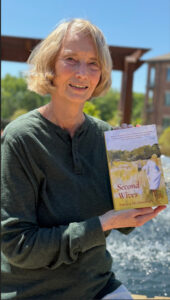 Originally from New York State, Patricia McAlexander earned a BA from SUNY Albany, an MA from Columbia University in New York City, and a PhD from the University of Wisconsin, Madison—all in English. She then moved to Athens, Georgia, with her husband and son, where she taught at the University of Georgia. Since retiring, she’s had more time to pursue interests like photography, gardening, travel, and hiking, but most of all she’s loved writing fiction. Since 2020 she has published four contemporary romantic suspense novels and, most recently, Second Wives, historical fiction inspired by Patricia’s ancestors who immigrated to New York from Baden in 1850. Patricia says, “I’ve always felt that one of the rewards of writing is the process itself, but that was especially true with Second Wives, as those ancestors I never knew came to life for me. Even more rewarding is when I’m told they came to life for readers as well.”
I hope you loved getting to know Patricia McAlexander and learning of her latest release, Second Wives. If you haven’t added her books to your TBR yet, now’s the time—trust me, you won’t want to miss them. 💖
You can connect with Patricia here:
📱 Socials: Instagram | Facebook | X
🛒 Grab her books: Amazon | Barnes&Noble
Thank you for joining me in spotlighting a fellow author who’s giving us all the feels. Stay tuned for more author features, book talks, and behind-the-scenes romance goodness.
Until next time—keep reading, keep swooning! 💖